
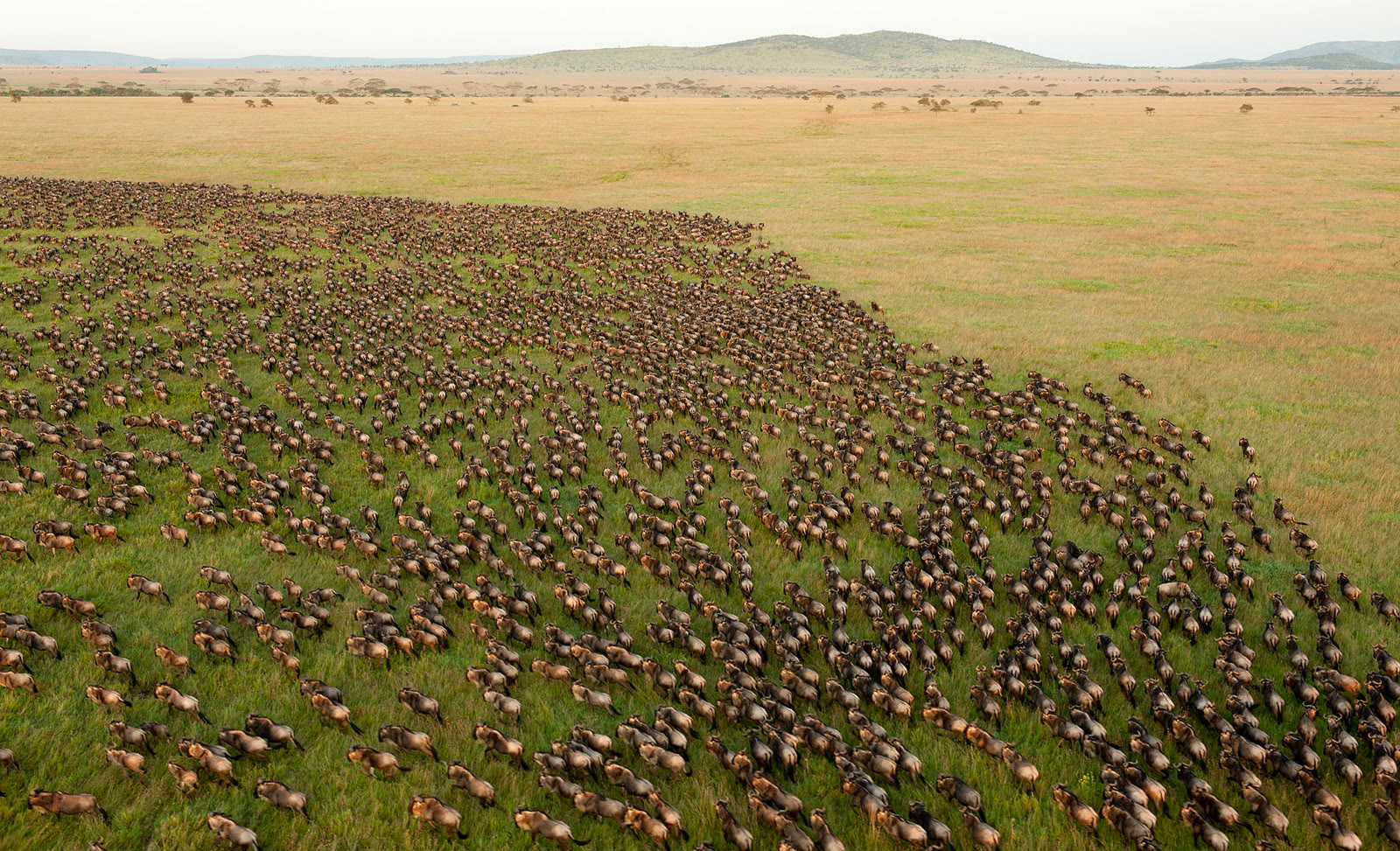
If you want to witness one of the greatest wildlife spectacles on Earth, a wildebeest migration safari belongs at the top of your bucket list. Every year, more than two million wildebeest, zebras, and antelope move in a giant loop between Tanzania’s Serengeti and Kenya’s Masai Mara National Reserve, chasing the rains and the fresh grass that follows them. This guide walks you through exactly when to go, where to base yourself, and which safari packages put you in the right place at the right time, so you can plan a trip that delivers the moment you’re picturing: a river full of wildebeest, crocodiles waiting below, and you watching it all unfold from a safe, front-row seat.
Key Takeaways
- The Great Wildebeest Migration is a continuous, year-round movement of over two million animals across a roughly 3,000-kilometre loop, driven by their search for fresh grass and water.
- July and August are the best months if you want to see the dramatic Mara River crossings, making this the peak window for a migration safari.
- Tanzania’s Serengeti National Park and Kenya’s Masai Mara National Reserve are the two premier destinations for witnessing the migration, each offering a different chapter of the story.
- You can combine your migration safari with other iconic parks, and our team can tailor the timing, route, and pace to match exactly what you want to see.
Understanding the Great Wildebeest Migration
The Great Wildebeest Migration is widely considered one of the greatest natural wonders left on the planet. Over a million wildebeest, joined by hundreds of thousands of zebras and gazelles, move every year between Tanzania’s Serengeti and Kenya’s Masai Mara. What drives them is simple: grass and water. As the seasonal rains shift, so does the herd, tracing a looping route of around 3,000 kilometres that keeps the landscape in constant motion.
What makes the migration so gripping to watch is the relationship between predator and prey. As the herds graze their way across the plains, they’re trailed by lions, cheetahs, and hyenas, setting the stage for dramatic hunts and narrow escapes. It’s a real-time lesson in survival, and no two game drives play out the same way.
The most talked-about moment is the river crossing, especially at the Mara River, where wildebeest have to brave fast currents and lurking crocodiles to reach the other side. These crossings are unpredictable by nature, which is exactly what makes them so exciting to witness in person. While the migration itself runs all year, each season brings you a different chapter of the story.
Best Times to Witness the Migration
Because the migration never really stops, there’s no single “right” month to travel, but some periods deliver far more drama than others. Here’s what you can expect season by season:
December – March: The herds move south through the Serengeti, taking advantage of short rains and fresh grazing. By January, calving season is in full swing, with thousands of wildebeest giving birth. It’s a vulnerable time for the newborns, which draws in predators, and watching calves take their first steps is one of the most moving experiences you can have on safari.
April – June: The rutting season begins in April as males compete for mates, and by May and June the herds start pushing northwest toward the Serengeti’s richer grazing. Central Serengeti becomes a hive of activity as the animals build up for the crossings ahead.
July – August: This is peak migration season and the reason most travelers book a migration safari in the first place. The wildebeest make their daring crossings of the Mara River, battling swift currents and crocodiles in scenes that are as tense as they are unforgettable. If a river crossing is the moment you want to see, this is your window.
September – October: The herds split into smaller groups, with many settling into the Masai Mara itself. It’s still an excellent time to travel, with wildlife concentrated across the reserve’s plains and plenty of predator-prey action to watch.
November – December: As the year winds down, the wildebeest begin their journey back south, crossing the Mara River once more en route to the eastern Serengeti. These months can be unpredictable as the herds spread out, but they still offer a genuine glimpse of the migration heading into its next cycle.
Top Destinations for a Migration Safari
Two destinations dominate any serious migration itinerary: Tanzania’s Serengeti National Park and Kenya’s Masai Mara National Reserve. Most travelers choose one, though combining both gives you the fullest picture of the migration’s journey.
Serengeti National Park
Serengeti National Park is one of the world’s most iconic wildlife destinations, spanning over 14,000 square kilometres across several distinct regions, each showing you a different stage of the migration.
Southern Serengeti is calving central, where thousands of wildebeest give birth between January and March. It’s an emotional, exciting sight, and the sheer number of vulnerable calves draws in lions, cheetahs, and hyenas for some of the most dramatic predator-prey action of the year.
Central Serengeti comes alive in the dry season, when large herds of wildebeest and gazelle pack the plains. With nearly 3,000 lions estimated across the park, this is prime territory for watching apex predators at work.
Northern Serengeti is famous for its Mara River crossings, especially popular from July through October, when the wildebeest face crocodile-infested waters in one of the most dramatic moments of the entire migration.
Masai Mara National Reserve
Just across the border in Kenya, the Masai Mara National Reserve is one of Africa’s most celebrated wildlife reserves, and during migration season it becomes one of the very best places on the continent to witness the spectacle.
The Mara and Talek Rivers are where the reserve’s most iconic moments happen: wildebeest and zebra braving swift currents and crocodile-infested waters, typically between July and October, though crossings can happen sporadically depending on the weather.
Beyond the crossings, the Masai Mara gives you outstanding wildlife viewing year-round, including lions, leopards, cheetahs, and elephants across open savannahs and rolling hills. The reserve is also home to the Maasai people, adding a rich cultural dimension to your visit alongside the wildlife.
Popular Wildebeest Migration Safari Packages
Whichever chapter of the migration you want to see, we have a package built around it, and every itinerary can be adjusted to your dates, pace, and budget.
5-Day Serengeti Migration Safari
Our 5-Day Serengeti Migration Safari is built for travelers who want to go straight to the heart of the action in Tanzania, with game drives timed to the migration’s movement through the Serengeti’s different regions.
6-Day Tanzania Northern Circuit Safari
If you’d like to pair the migration with Tanzania’s other headline parks, our 6-Day Tanzania Northern Circuit Safari takes you through the Serengeti alongside destinations like Ngorongoro Crater and Tarangire National Park for a fuller picture of northern Tanzania’s wildlife.
8 Days Kenya Tanzania Migration Safari
For the most complete migration experience, our 8 Days Kenya Tanzania Migration Safari covers both the Serengeti and the Masai Mara in one trip, letting you follow the herds across both countries and see the migration from two different vantage points.
Don’t see the exact fit? Tell us your travel dates and priorities and we’ll build a tailor-made safari around them.
Key Wildlife Encounters During the Migration
The migration isn’t only about the movement of mega-herds, it’s also about the dramatic wildlife encounters that unfold along the way. River crossings are the most perilous moments for the wildebeest, with Nile crocodiles waiting beneath the surface and many animals not making it across.
Predators play an outsized role too. With over 3,000 lions estimated in the Serengeti alone, it’s one of the best places anywhere to watch these predators in action, while cheetahs, prized for their speed, often target younger, more vulnerable wildebeest. Beyond the headline predators, you’ll also see zebras, antelope, and a huge variety of birdlife, all part of the same interconnected story of survival.
Accommodation Options on a Migration Safari
Where you stay shapes your whole migration experience, and there are two main options: permanent lodges and mobile camps.
Permanent Lodges
Permanent lodges bring you comfort and consistency, often with glass-sided suites, swimming pools, spas, and en-suite bathrooms. Some are positioned directly along river stretches, giving you wildlife viewing right from your room, and they tend to suit families and larger groups well thanks to their spacious, solid structures.
Mobile Safari Camps
Mobile camps follow the migration itself, relocating periodically so you’re always close to where the action is happening. Despite their flexibility, they don’t skimp on comfort, many offer genuine luxury touches and memorable dining experiences right in the wilderness, combining adventure with a surprising amount of relaxation.
Tips for Planning Your Wildebeest Migration Safari
Book at least a year in advance if you want the best accommodations and guides during peak season. Think carefully about timing and location if a specific event, like a river crossing or the calving season, is what you’re hoping to see.
To get even more out of your trip, consider combining your migration safari with destinations like Amboseli or Ngorongoro Crater for a broader view of Kenya and Tanzania’s wildlife. We’ll tailor your package around your timing, budget, and priorities, and if you’d rather avoid the busiest crowds, we can help you plan around peak season for a more intimate experience. For a full cost breakdown by travel style, see our safari cost guide, and if you’re weighing Kenya against Tanzania specifically, our Serengeti vs Masai Mara cost comparison breaks down exactly where your money goes furthest.
Summary
The Great Wildebeest Migration is a genuine natural wonder and one of the most rewarding safari experiences you can have. From heart-stopping river crossings and predator-prey drama to the sweeping landscapes of the Serengeti and Masai Mara, this is the kind of trip that stays with you long after you’ve left. Get the timing and destination right, and you’ll walk away with memories that are hard to top.
Whether you picture yourself in a luxury lodge or a mobile camp that follows the herds, planning ahead is what turns a good migration safari into an unforgettable one. Ready to see it for yourself? Start planning your migration safari today.
Frequently Asked Questions
When is the best time to witness the wildebeest migration?
Visit from July to August for thrilling river crossings, or from December to March for the calving season, for an incredible adventure either way.
What are the main destinations to experience the migration?
Tanzania’s Serengeti National Park and Kenya’s Masai Mara National Reserve are both stunning destinations for an unforgettable experience.
What types of accommodation are available during a migration safari?
Accommodation options range from luxurious permanent lodges for comfort to mobile camps for a closer, more immersive experience, each offering a different perspective on the migration.
How far in advance should I book my migration safari?
Book at least a year ahead to secure the best accommodations and guides for your dates.
Can I combine my migration safari with other destinations?
Absolutely. Combining your migration safari with places like Amboseli and the Ngorongoro Crater enriches your trip and gives you even more wildlife encounters. Talk to us and we’ll build the itinerary around it.