13 Days Tanzania Safari and Zanzibar Holiday
Our flagship itinerary, this Tanzania Safari and Zanzibar Holiday is a full thirteen days built to properly cover Tanzania's northern safari circuit before rewarding you with a genuine island escape. Rather than rushing between parks, the pacing here allows two to three nights in each key destination, giving the Serengeti in particular the time it deserves — both its wildlife-dense central plains and its quieter, migration-season northern reaches near the Mara River.
This 13 Days Tanzania Zanzibar Tour is designed for travelers who want the complete Tanzanian safari experience in one trip rather than piecing together shorter add-ons: the elephant herds and baobab-studded plains of Tarangire, the extraordinary wildlife density of the Ngorongoro Crater floor, and days spent following the wildebeest migration across the Serengeti's central and northern sectors. It suits honeymooners, milestone-anniversary travelers, and dedicated wildlife enthusiasts who have the time to do Tanzania justice.
Between June and October, the itinerary is timed to put you in the Serengeti's northern reaches precisely when migration herds mass along the Mara River before their dramatic, crocodile-guarded crossings — one of the most sought-after wildlife spectacles on the planet. From the bush, a short flight delivers you to Zanzibar, where Stone Town's Swahili-Arabic architecture, a fragrant spice-farm tour, and days of white sand and warm Indian Ocean water bring the trip to a completely different, equally memorable close.
This Serengeti Ngorongoro Zanzibar Safari includes ground transport in a 4x4 safari vehicle with pop-up roof throughout the mainland leg, all park and conservation fees, an internal flight from the Serengeti to Zanzibar, and a dedicated beach stay on the island. From $2,000 per person sharing, with meals, transport, park fees, a driver-guide and the Zanzibar flight included throughout this Tanzania Safari Beach Combo.
Day-by-Day Itinerary
Arusha to Tarangire National Park
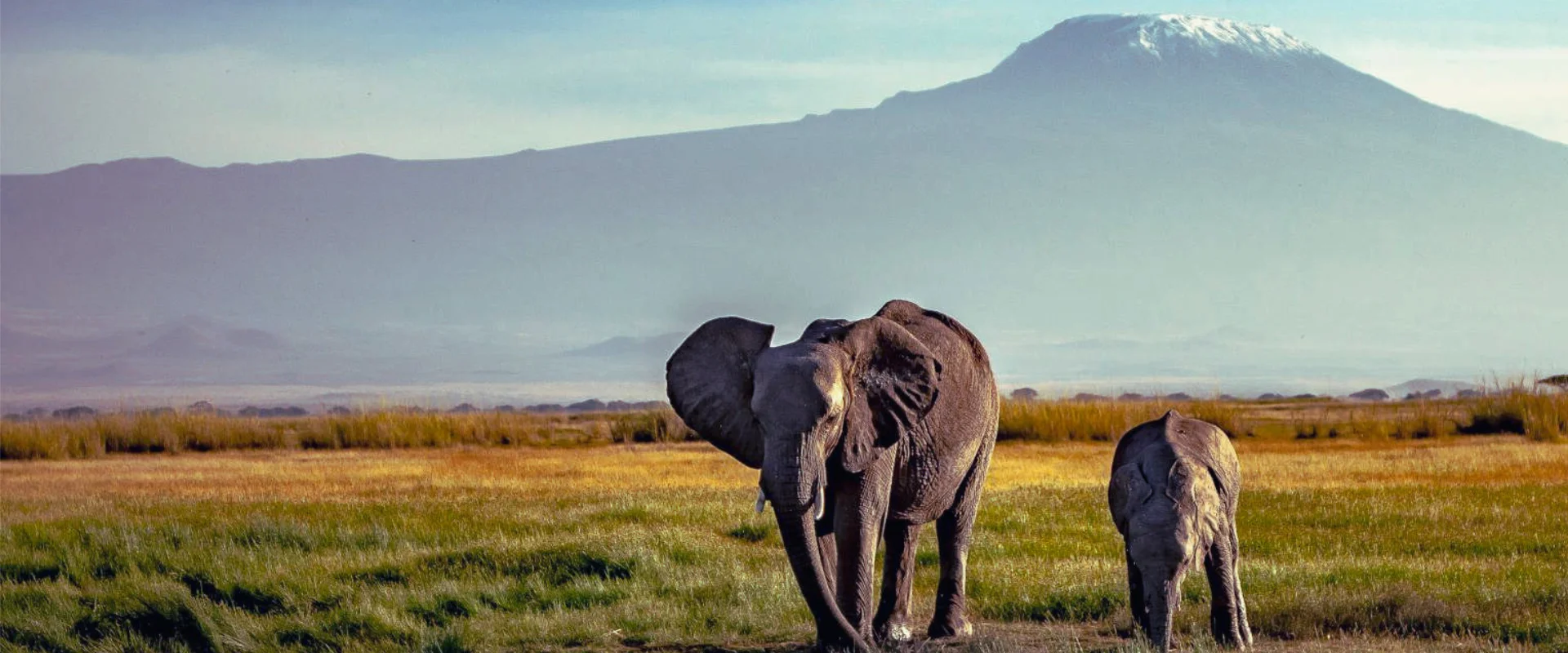
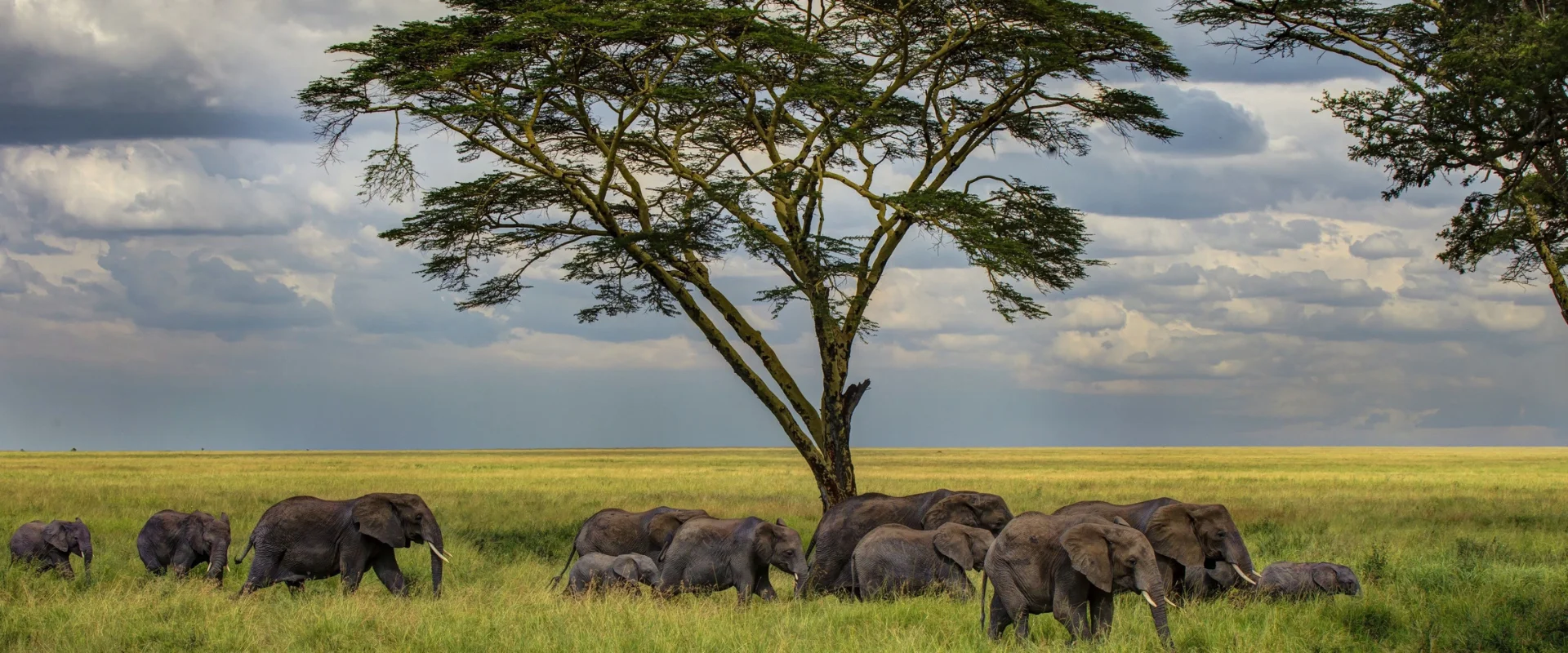
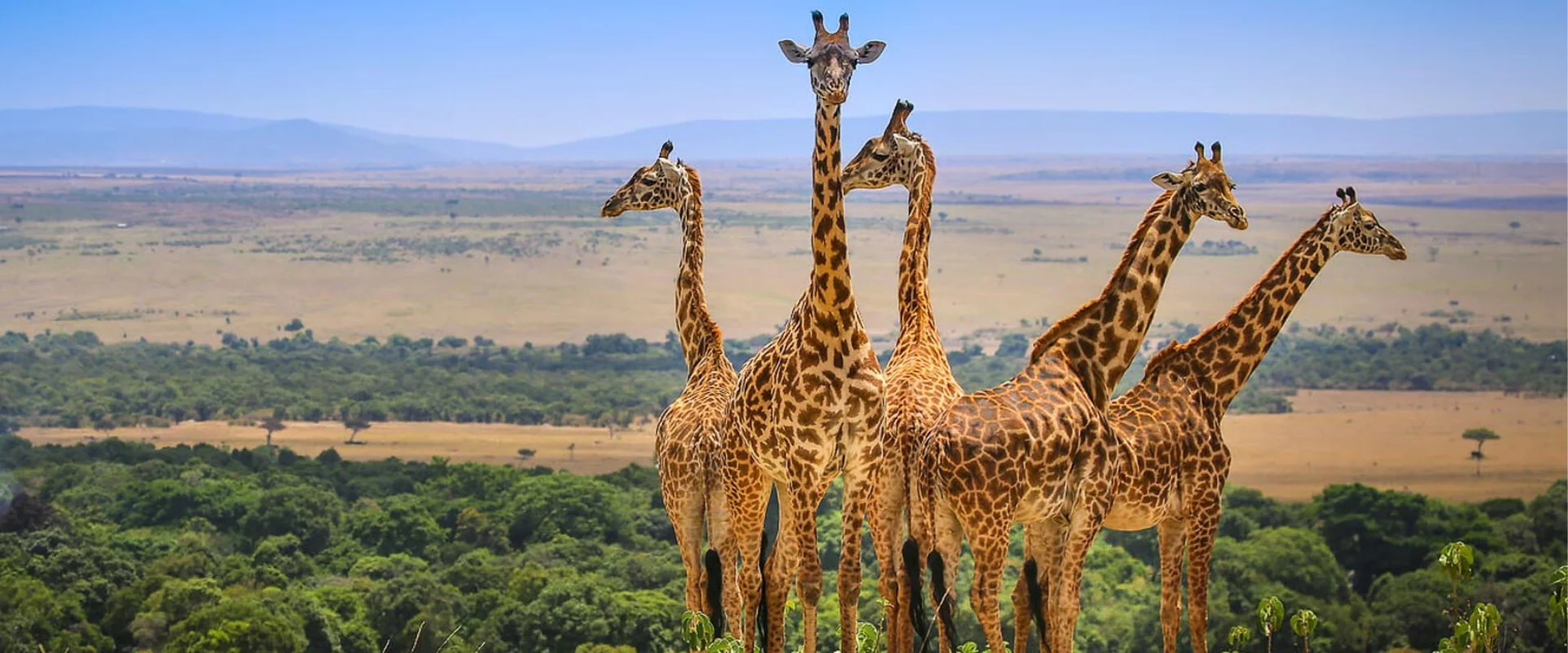
Your Tanzania safari begins with a morning departure from Arusha toward Tarangire National Park, a quieter reserve slightly off the main safari circuit but treasured by returning visitors for exactly that reason. Tarangire is famous above all for its elephants: dry-season herds of several hundred converge on the Tarangire River, the area's only permanent water source, digging for underground streams in the sandy riverbed and stripping bark from its iconic ancient baobab trees. A guided game drive through the park reveals classic Tanzanian savanna scenery, dotted with termite mounds and enormous baobabs that can be centuries old, along with giraffe, zebra, buffalo, and if you are fortunate, a pride of tree-climbing lions. Birdlife is exceptional too, with over 550 species recorded, from the striking yellow-collared lovebird to numerous raptors overhead. In the early evening, continue on to the Karatu area at the base of the Ngorongoro Highlands, passing a lively local market en route, before checking in to your lodge for dinner and an overnight rest ahead of tomorrow's descent into the crater.
Descending into the Ngorongoro Crater
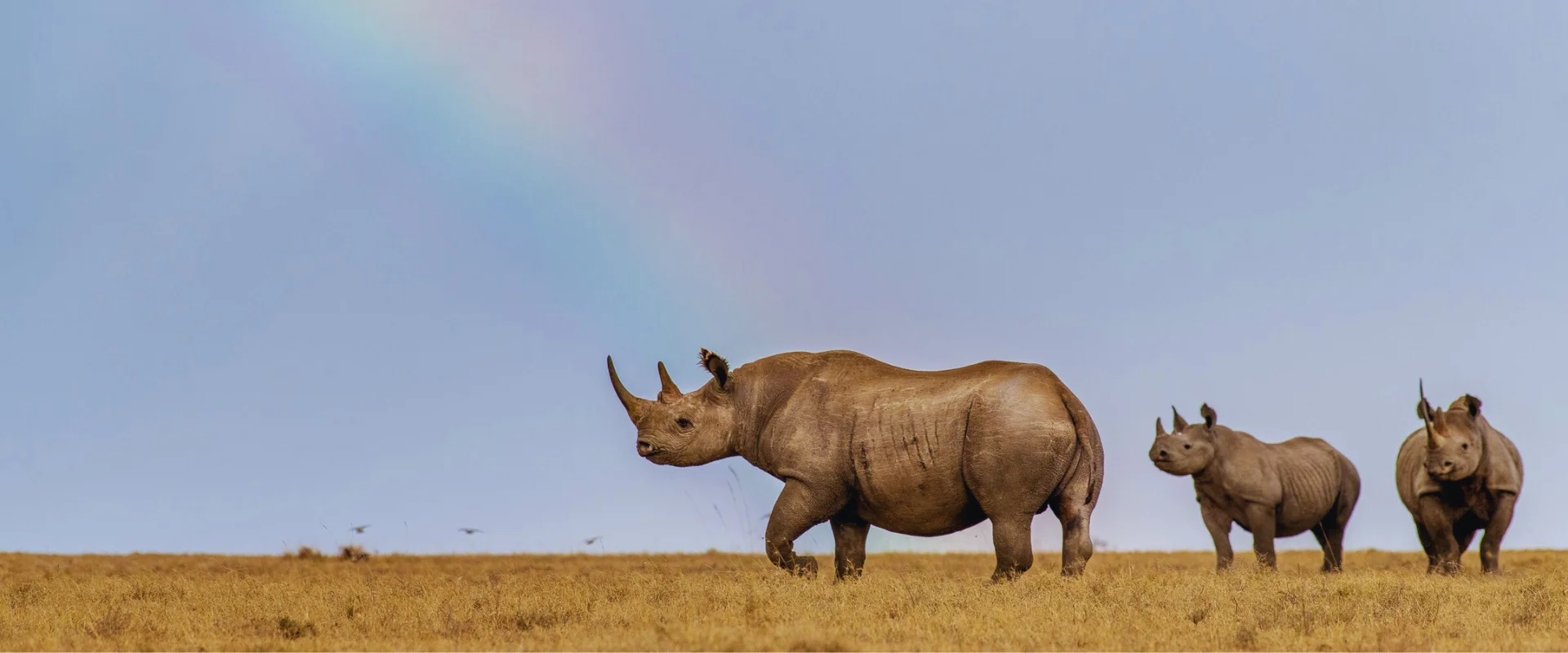
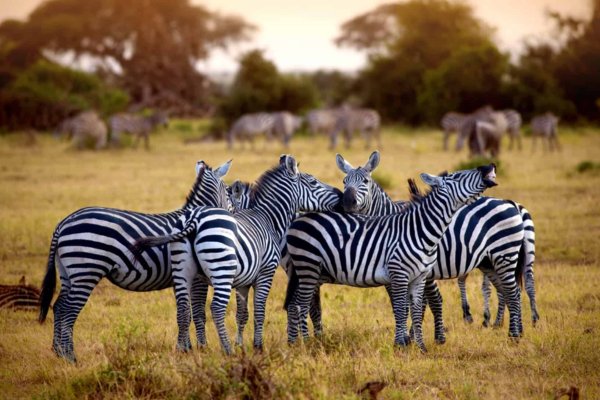
After breakfast, depart for the Ngorongoro Conservation Area, driving up through lush highland forest before reaching the crater rim, where the view down into this vast volcanic caldera is one of the most dramatic in Africa. A 4x4 descent brings you onto the crater floor, home to an estimated 25,000 large mammals in a self-contained ecosystem roughly 260 square kilometres in area. Grazers dominate the plains — zebra and wildebeest together account for nearly half of all resident animals, alongside gazelle, buffalo, eland, hartebeest and warthog. Look out for the crater's elephants, almost exclusively old bulls, since breeding herds tend to seek richer grazing outside the caldera. Ngorongoro also holds one of Africa's densest predator populations: around 100 lions and more than 400 spotted hyena organized into clans of up to eighty animals, with lion and hyena frequently competing over kills. This is also one of your best chances anywhere in Tanzania of spotting the endangered black rhino grazing in the open. In the early evening, ascend back to the rim and continue to your lodge for dinner and overnight.
Into the Endless Plains of the Central Serengeti
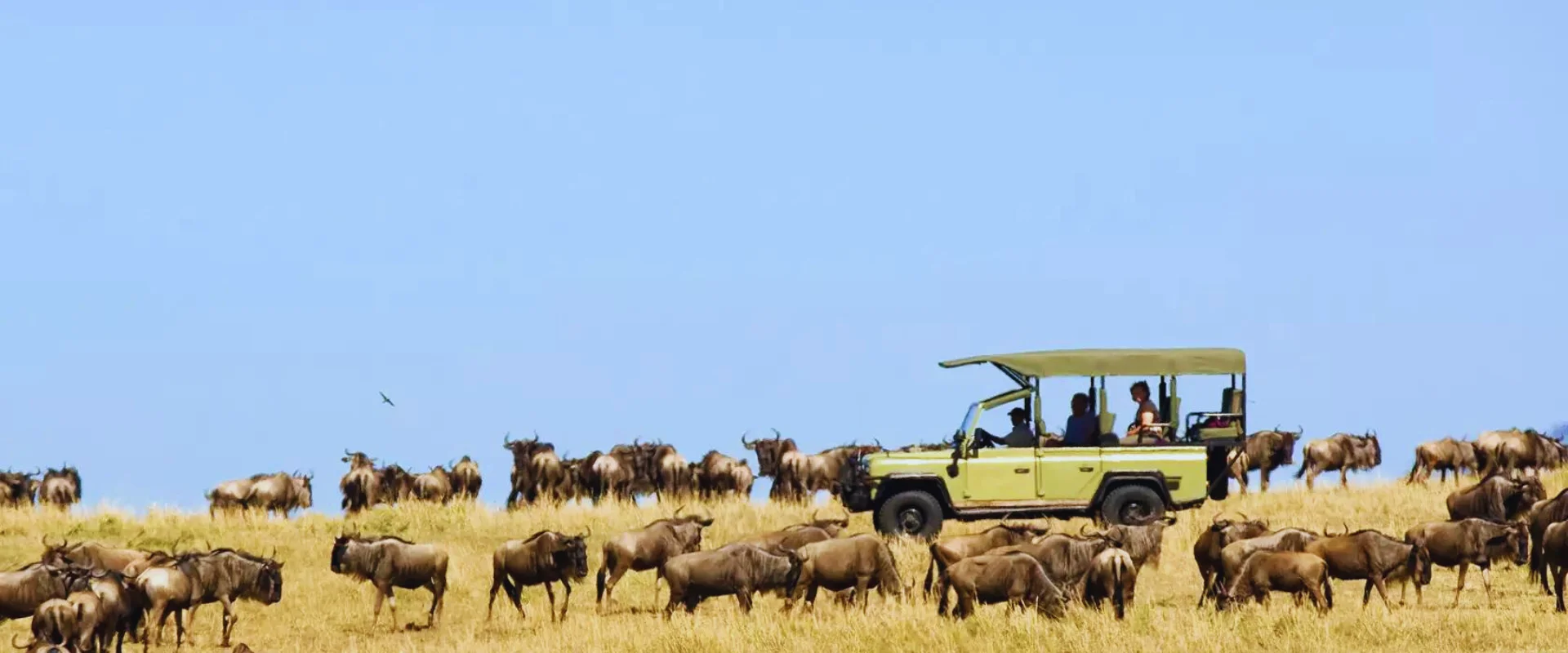
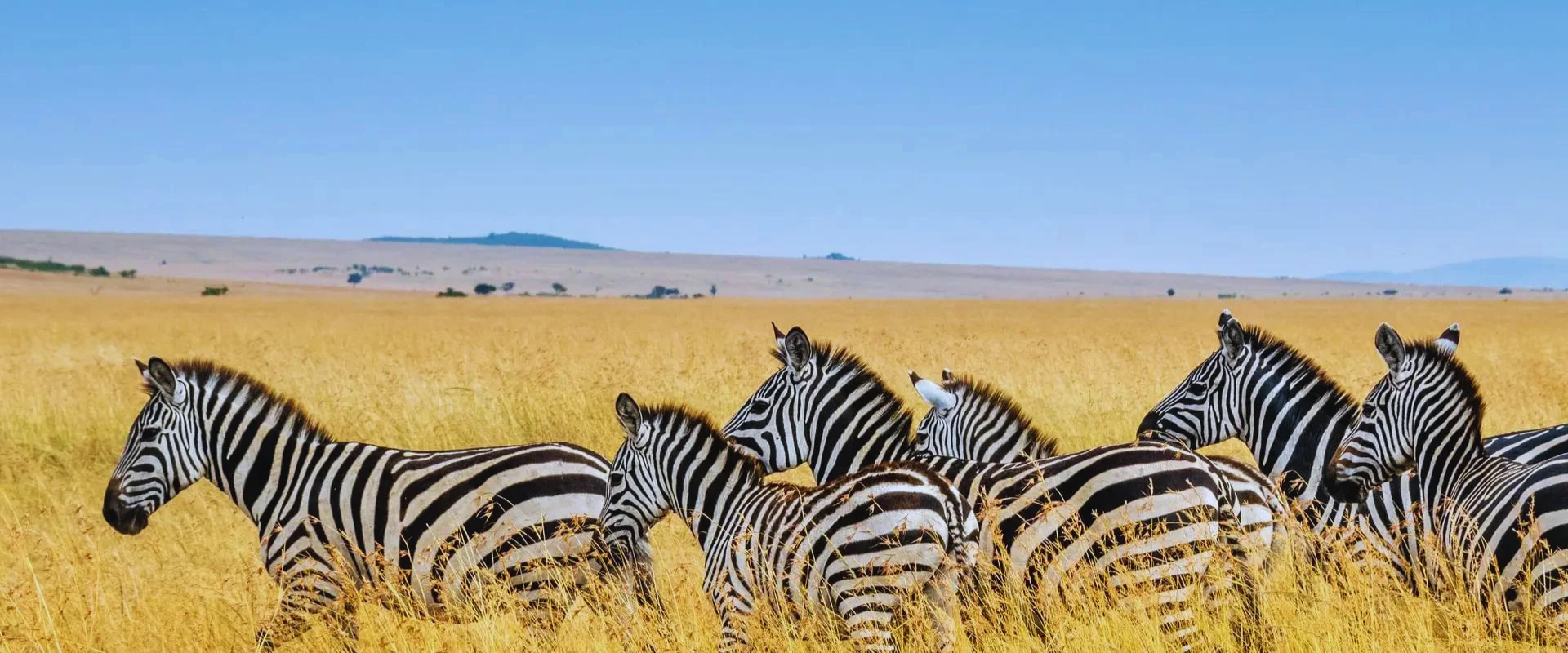
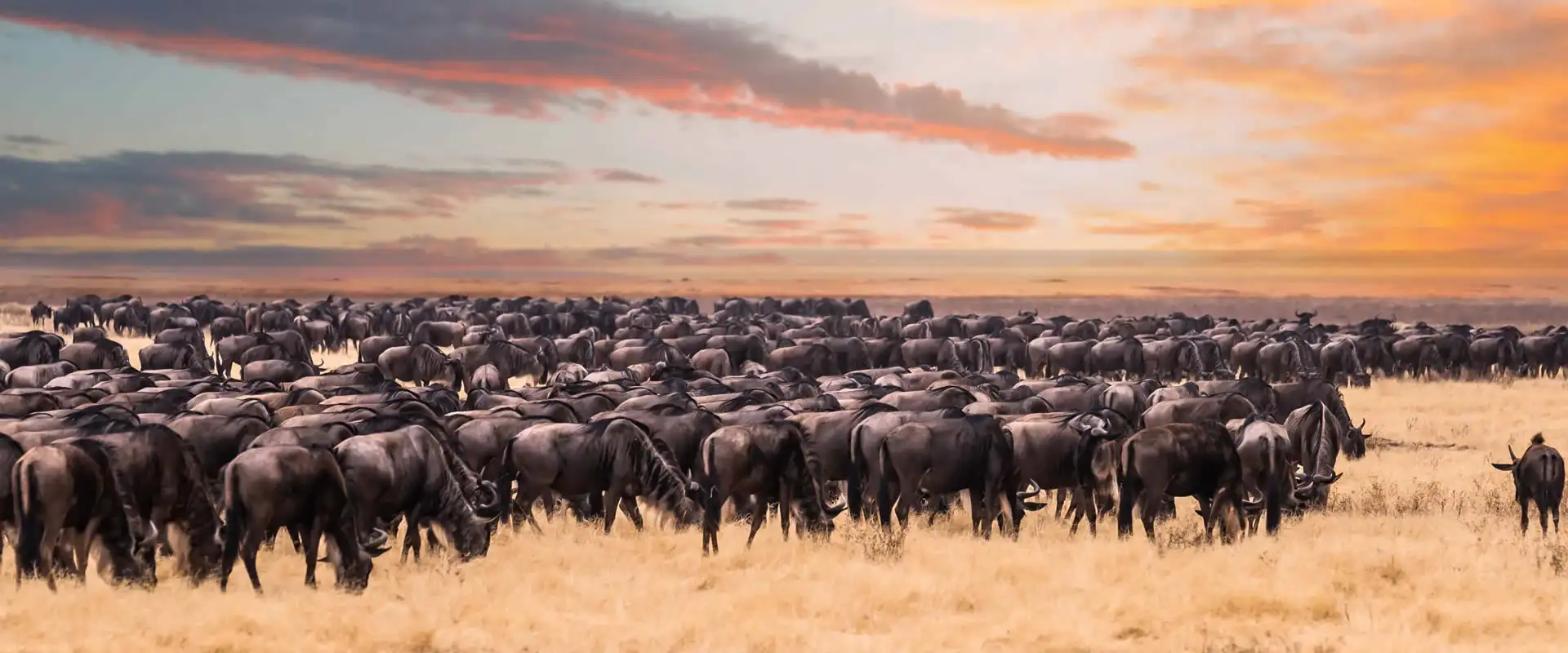
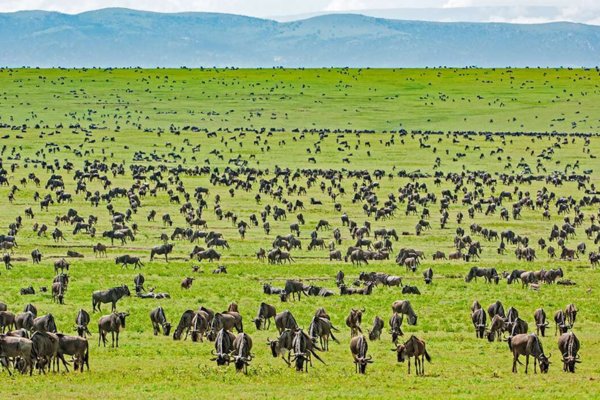
This morning you leave the highlands behind and descend onto the legendary plains of the Serengeti, a Maasai word meaning 'endless plains' that perfectly captures the sweeping, horizon-to-horizon grassland ahead. The drive itself doubles as a game drive, crossing the short-grass plains of the Ndutu and Naabi Hill areas where wildlife concentrations can be spectacular depending on the season. The Serengeti hosts the annual wildebeest migration, in which some six million hooves pound these plains as more than 200,000 zebra and 300,000 Thomson's gazelle join the wildebeest on their endless trek for fresh grazing. Even outside peak migration periods, the Serengeti offers arguably the most reliable game-viewing in Africa, with resident lion prides, elephant herds, giraffe, and predators including cheetah using termite mounds as vantage points across the open grassland. You arrive at your camp in the Seronera area, the ecological heart of the park, in time to settle in before dinner and overnight, with the sounds of the surrounding bush audible from camp after dark.
Full Day of Game Viewing in the Serengeti
Depart with a packed picnic lunch for a full day exploring the Serengeti's central Seronera region, celebrated for its healthy resident populations of the Big Five and, in particular, for holding what is believed to be the largest lion population in Africa — more than 3,000 individuals across the wider ecosystem, sustained by an abundance of prey. The Seronera River Valley is a reliable spot for African leopard, commonly seen draped across acacia branches in this area though found throughout the park, with a population estimated around 1,000. The Serengeti's grasslands and kopjes (isolated granite outcrops) also provide superb vantage points for spotting cheetah scanning for prey. Beyond mammals, the park supports roughly 500 recorded bird species, from the outsized ostrich and the bizarre ground-dwelling secretary bird of the open plains, to black eagles soaring above the distant Lobo Hills. Depending on the season, you may also encounter migration herds moving through this central sector. Return to camp in the late afternoon for a relaxed dinner and overnight, with a second full day in the park still ahead tomorrow.
Journey to the Wild Northern Serengeti
Depart this morning with a picnic lunch to explore the far quieter safari trails of the Northern Serengeti, following the Grumeti and Mara river systems toward the border with Kenya. This remote corner of the park sees dramatically fewer visitors than the central Seronera area, allowing you to take in its dramatic kopjes, riverine forest and open grassland in relative solitude. Wildlife viewing here is excellent throughout the year, but the region becomes truly extraordinary between roughly July and October, when the migration's enormous herds move north through the Lobo, Bologonya and Mara regions, gathering in their thousands along the riverbanks before attempting crossings of the crocodile-filled Mara River. Even outside those months, resident wildlife along the river corridors, including elephant, giraffe, topi and predators tracking the permanent water source, make for consistently rewarding game drives. Arrive at your camp in the late afternoon, positioned to make the most of tomorrow's exploration of this exceptional, low-traffic wilderness.
Full Day Along the Mara River and Northern Plains
Spend a full day following the safari trails of the Northern Serengeti in search of the region's resident and migratory wildlife. If you are visiting during the July-to-October migration window, your guide will focus the day's game drive around known river-crossing points, where tension builds as herds mass on the banks before a crossing attempt, occasionally punctuated by dramatic encounters with waiting Nile crocodiles. Outside migration season, the northern sector still rewards patient game viewing with sightings of elephant, giraffe, buffalo, topi and resident lion prides that hold territory along the riverine woodland, along with excellent birding among the acacia thickets and rocky kopjes. The relative remoteness of this area, one of the least-visited corners of the entire park, means encounters here often unfold without another vehicle in sight, a distinct contrast to the busier central Serengeti earlier in your trip. Return to camp for a relaxed evening, with tomorrow's short flight to Zanzibar marking the transition from safari to island.
Final Game Drive and Flight to Zanzibar
Enjoy one last morning game drive in the Northern Serengeti, savoring the open plains, river crossings and resident wildlife of this exceptional wilderness before your safari transitions to the coast. Afterwards, transfer to Kogatende Airstrip for your scheduled flight to Zanzibar, crossing from the mainland's dry, dust-gold plains to the turquoise waters and palm-lined beaches of the Indian Ocean in a matter of hours. On arrival at Zanzibar's Abeid Amani Karume International Airport, you are met and transferred to your beachfront hotel, where the change of pace is immediate and welcome after six days on safari. Take the rest of the afternoon to settle in, walk the beach, and adjust to the island's slower, tropical rhythm. Dinner at your hotel that evening marks the beginning of the second, entirely different half of this Tanzania Safari and Zanzibar Holiday.
Stone Town and a Zanzibar Spice Farm Tour
Spend today exploring Zanzibar's rich cultural side, beginning with a guided tour of Stone Town, a UNESCO World Heritage Site whose narrow alleys, ornately carved wooden doors and blend of Swahili, Arab, Persian, Indian and European architecture reflect centuries as a hub of the Indian Ocean spice and, more darkly, slave trade. Visit the Old Fort, the House of Wonders, and the poignant former slave market before continuing to a working spice farm on the city's outskirts, where guides walk you through fields and groves of clove, nutmeg, cinnamon, vanilla and black pepper, letting you touch, smell and taste each spice fresh from the plant, a tradition that gave Zanzibar its historic nickname, the Spice Island. Many tours conclude with a fresh tropical fruit tasting and the option to purchase spices directly from the farm. Return to your hotel by evening, with the rest of your stay on the island reserved for the beach itself.
A Full Day of Beach Relaxation
With Stone Town and the spice tour behind you, settle into the unhurried rhythm of a proper beach holiday. Spend the day at leisure on Zanzibar's famous white sand, swimming in warm, calm, reef-protected water that ranges through every shade of turquoise and blue. Many beachfront hotels offer loungers directly on the sand, along with pools, spa treatments and beachside dining for those who prefer not to move far. This is also a good day to simply rest after an active safari week, catching up on sleep, journaling your wildlife sightings, or watching local fishermen bring in their daily catch by traditional outrigger canoe. As the island's dhow sails drift past on the horizon and the Indian Ocean breeze rolls steadily onshore, today offers exactly the kind of unstructured recovery time that makes pairing a safari with a Zanzibar extension so popular.
Snorkeling and a Traditional Dhow Cruise
Today is built around exploring Zanzibar's marine environment, among the richest in the Indian Ocean. Board a traditional dhow for a half-day excursion out to nearby reefs or sandbanks, where the water's exceptional clarity reveals coral gardens and colourful reef fish just below the surface. Snorkeling here regularly turns up green turtles, and with luck, the chance of spotting dolphins or, between July and September, migrating humpback whales offshore. For the more adventurous, kite surfing is a popular activity along this stretch of coast, taking advantage of reliable trade winds, while certified divers can arrange trips to sites near Mnemba Island, renowned for their visibility and marine biodiversity. Many excursions include a stop at a sandbank or small island for a fresh seafood lunch, grilled on board or on the beach, before sailing back to your hotel in the late afternoon. It is a full, activity-rich day that showcases why Zanzibar's waters are considered among the best in the world for snorkeling and diving.
Jozani Forest, Sea Turtles and a Spa Afternoon
Use today to explore Zanzibar's quieter natural corners. A morning excursion to Jozani Chwaka Bay National Park, the island's only national park, offers the chance to see the endemic Zanzibar red colobus monkey moving through the forest canopy, alongside a boardwalk trail through mangrove forest. Alternatively, visit the Sea Turtle Conservation Pond at the Baraka Aquarium, a small community-based project dedicated to preserving the island's green turtle population, where you can often see turtles of various ages up close. Back at your hotel by early afternoon, spend the remaining hours on a spa treatment, a relaxed swim, or simply reading on the beach as the trip's pace continues to slow. This gentler, nature-and-wellness-focused day offers a nice contrast to yesterday's more active boat excursion, rounding out a well-balanced final stretch of your Tanzania Safari Beach Combo.
Your Final Full Day in Zanzibar
Enjoy your last full day on the island exactly as you please. Return to a favourite snorkeling spot, spend the morning shopping for spices, textiles and handicrafts in Stone Town if you didn't cover everything on day eight, or simply claim a spot on the beach and watch the dhows sail past one final time. Many travelers use this day for a sunset dhow cruise along the coastline, sipping a cold drink as the sun drops into the Indian Ocean in a display of colour that makes for a memorable final evening. A last seafood dinner at your hotel, often featuring fresh-caught kingfish, prawns and lobster, brings a fitting close to the beach portion of this Serengeti Ngorongoro Zanzibar Safari before tomorrow's departure.
Departure from Zanzibar
Enjoy a final leisurely breakfast at your hotel, with time to relax by the beach or pool depending on your flight schedule. Our driver will collect you at the appropriate time for the transfer to Abeid Amani Karume International Airport in Zanzibar for your international flight home. This final morning brings a quiet, unhurried close to a truly comprehensive Tanzania Safari and Zanzibar Holiday — thirteen days that carried you from the baobab plains of Tarangire, into the wildlife-dense Ngorongoro Crater, across the endless grassland of the Serengeti, and finally to the white sand and warm water of Zanzibar, a complete sampling of Tanzania's very best safari and coastal experiences.
Photo Gallery
Explore the Destinations on This Safari
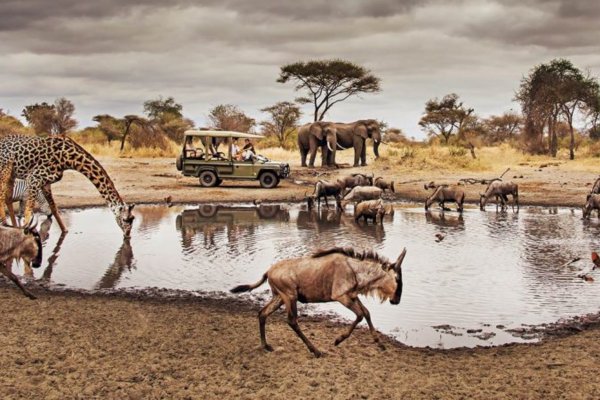
Tarangire National Park, named for the river that sustains it through the dry season, is famous above all for its elephants, with herds of several hundred gathering along the riverbanks between June and October. Ancient baobab trees, some centuries old, punctuate the park's rolling savanna, creating some of the most photogenic scenery in northern Tanzania. Beyond elephants, Tarangire supports tree-climbing lions, giraffe, zebra, buffalo and an outstanding bird list of more than 550 species. Its position slightly off the main safari circuit means noticeably fewer vehicles than the Serengeti or Ngorongoro, making it an excellent, relatively quiet opening chapter to a longer Tanzania itinerary.
The Ngorongoro Crater is the world's largest intact volcanic caldera, its floor supporting an estimated 25,000 large mammals within a self-contained ecosystem. Dense populations of zebra, wildebeest, buffalo and gazelle sustain around 100 lions and more than 400 spotted hyena, making this one of the best places in Africa to reliably encounter major predators in a single day. It is also one of the most consistent locations in Tanzania to spot black rhino. The dramatic descent from the forested crater rim onto the grassy caldera floor is itself one of the most memorable drives on this itinerary.
The Serengeti's name, meaning 'endless plains,' captures a landscape that stretches to every horizon and hosts the single greatest concentration of plains game left on Earth. The central Seronera region delivers reliable year-round sightings of lion, leopard and cheetah amid resident herds, while the Northern Serengeti near the Mara River offers a wilder, far less visited experience, becoming spectacular between July and October when migration herds gather for dramatic river crossings. Four full days spent across both sectors on this itinerary allow a genuinely thorough exploration rarely possible on shorter Tanzania safaris.
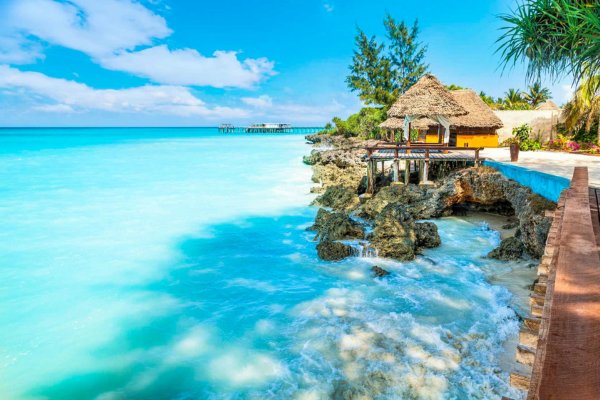
Zanzibar delivers a complete change of scenery after the safari: a UNESCO-listed Stone Town rich with Swahili, Arab and colonial history, working spice farms redolent with clove and cinnamon, and beaches ringed by some of the clearest water in the Indian Ocean. Snorkeling and diving around Mnemba Island rank among the best in East Africa, while Jozani Forest offers a rare chance to see the endemic Zanzibar red colobus monkey. Six nights on the island provide ample time to balance culture, marine activities and pure beach relaxation, rounding out this Tanzania Safari and Zanzibar Holiday with an entirely different but equally memorable half.
What's Included
- Meals as specified in the day-by-day itinerary throughout the safari and beach stay
- Ground transportation in a 4x4 safari vehicle with pop-up roof for the Tanzania safari leg
- All national park fees, government taxes and service charges
- Bottled water during the safari days
- Services of an experienced, English-speaking driver-guide
- Flight from the Serengeti/Kogatende airstrip to Zanzibar
- Airport transfers in both Tanzania and Zanzibar
Trip Planning Guide
This is the site's longest, most complete itinerary, spanning savanna, crater and coast.
- Tarangire: Large elephant herds and centuries-old baobab trees.
- Ngorongoro Crater: Dense lion and hyena populations, black rhino, and around 25,000 large mammals.
- Serengeti (Central & North): Resident big cats year-round and, from July to October, dramatic Mara River migration crossings.
- Zanzibar: Stone Town's Swahili heritage, spice farms, coral reefs and white sand beaches.
- Visa & entry: A Tanzania e-Visa is required for most nationalities and should be arranged online before travel; Zanzibar shares Tanzania's visa policy.
- Internal flight: The Serengeti-to-Zanzibar flight has modest luggage limits, typically around 15kg in soft-sided bags.
- Currency: US dollars and Tanzanian Shillings are both widely accepted; carry small denomination bills for tips and market purchases.
- Vaccinations: Yellow fever certification may be required depending on your routing; malaria prophylaxis is recommended for the mainland safari portion.
- Neutral safari clothing plus swimwear and light, breathable beachwear
- A warm layer for early mornings in the Ngorongoro Highlands and Serengeti
- Reef-safe sunscreen for Zanzibar's marine excursions
- Comfortable walking shoes and sandals
- Binoculars and a camera with a versatile zoom lens
- A dry bag for boat excursions and snorkeling gear
This itinerary is at its most spectacular between June and October, when dry conditions concentrate wildlife around Tarangire's river and bring the migration's dramatic Mara River crossings into the Northern Serengeti, coinciding with Zanzibar's driest, sunniest beach weather. December to February offers good game viewing and calving season on the southern plains, along with warm, popular beach conditions in Zanzibar. The long rains from March to May bring lower rates and lush scenery but heavier showers on both the mainland and the coast.
Tour Route Map
Frequently Asked Questions
This 13-day itinerary is priced from $2,000 per person sharing, including meals, park fees, ground transport with a driver-guide, the internal flight to Zanzibar, and airport transfers.
If you travel between roughly July and October, the itinerary's days in the Northern Serengeti are timed to give you a strong chance of witnessing migration herds and Mara River crossings, though wildlife movement is never guaranteed.
This Serengeti Ngorongoro Zanzibar Safari spends six days on the Tanzania mainland safari circuit and six nights on Zanzibar, giving a genuinely balanced split between wildlife and beach time.
No, an internal flight from the Serengeti's Kogatende airstrip directly to Zanzibar is included in the package, so you don't need to route back through the mainland's main airports.
Yes, the combination of an in-depth safari followed by a genuine week-long beach stay makes this one of our most popular honeymoon and anniversary itineraries.
Meals as specified in the itinerary, 4x4 safari transport with pop-up roof, all park fees, bottled water on safari, an English-speaking driver-guide, the Zanzibar flight, and airport transfers are all included.
International flights and visa fees, tips, travel insurance, souvenirs, and optional excursions on Zanzibar such as diving trips or spice farm tours booked independently are excluded.
Yes, while this is our full 13-day flagship itinerary, we can adjust the number of nights in each location or swap specific Zanzibar activities to suit your schedule and interests.
Yes, a Tanzania e-Visa covers both the mainland and Zanzibar, as the island is part of the United Republic of Tanzania; arrange this online before you travel.
The crater floor supports around 25,000 large mammals, including dense populations of lion and hyena, plus one of Tanzania's best chances of spotting the endangered black rhino.
13 Days Tanzania Safari and Zanzibar Holiday